

According to research published in Frontiers in Psychology, professionals across management, finance, medicine, and law consistently fall prey to cognitive biases that limit their decision-making to binary choices—even when multiple viable options exist. This tendency toward false choice thinking costs organizations billions in missed opportunities and suboptimal outcomes of critical thinking.
The human brain craves simplicity, but reality operates in shades of gray. When we rebel against false choice thinking and embrace “both/and” solutions instead of “either/or” limitations, we unlock breakthrough strategies that seemed impossible within traditional binary frameworks.
Key Takeaways
- Binary thinking creates artificial limitations that prevent innovative solutions •
- Work-life integration outperforms the false choice of work-life balance in measurable ways
- Racing dynamics demonstrate how apparent opposites like speed and control actually enhance each other
- Corporate breakthroughs happen when teams stop choosing sides and start synthesizing options
- Practical frameworks exist for identifying and dismantling false choices in daily decisions
Why Our Brains Love False Choices (But Reality Doesn’t)
Your brain processes approximately 35,000 decisions per day. To manage this cognitive load, it develops shortcuts—what psychologists call heuristics. One of the most pervasive shortcuts is binary categorization: good or bad, right or wrong, us or them.
Research from Harvard Business Review identifies this as the “either/or trap,” where decision-makers artificially limit options to just two alternatives. The research reveals that even experienced executives fall into this trap, missing creative solutions that emerge from combining seemingly opposing approaches.
Consider how this plays out in typical workplace scenarios. Teams debate whether to prioritize speed or quality, forgetting that the world’s most successful companies excel at both. Leaders choose between being data-driven or people-focused, missing the insight that emotional intelligence enhances analytical capabilities rather than competing with them. Critical thinking reveals these as false choices that limit our potential solutions.
The Work-Life Balance Myth: A Case Study in False Choice Thinking
Perhaps nowhere is false choice thinking more destructive than in the persistent myth of work-life balance. The phrase itself implies a zero-sum game—more time for work means less for life, and vice versa.
Recent research published in the PMC database demonstrates that work-life integration produces superior outcomes compared to traditional balance approaches. When 318 workers were studied across multiple dimensions, those practicing integration reported 25% higher satisfaction rates and significantly lower burnout indicators.
The key insight: work and life aren’t opposing forces requiring balance—they’re complementary dimensions requiring harmony. Integration practitioners structure their days around energy management rather than time management, allowing professional achievements to fuel personal fulfillment and vice versa.
The Center for Creative Leadership explains why the balance metaphor fails: “Where balance suggests an unrealistic image of doing it all—and in just the right amounts—boundaries open more options both for individuals and for organizations.”
Breaking the Integration Myth
Integration isn’t about working from home or checking emails during family dinner. True integration involves three core principles:
Identity Alignment: Your professional role enhances rather than competes with your personal values. A marketing professional passionate about sustainability might excel at promoting eco-friendly products, creating synergy between career advancement and personal mission.
Energy Optimization: You schedule demanding work during peak energy periods while allocating depleted-energy times for routine tasks or personal restoration. This isn’t about working more hours—it’s about working when your cognitive resources align with task demands.
Boundary Flexibility: Instead of rigid compartments, you create permeable boundaries that adapt to changing circumstances. A parent might handle a school emergency during work hours, then focus intensely on a project after children’s bedtime.
Racing Dynamics: When Speed and Control Dance Together

My experience driving a Porsche 992 GT3 Cup car in the Porsche Sprint Challenge series taught me the most visceral lesson about false choice thinking I’ve ever encountered. Like most drivers, I started with the intuitive assumption that cornering faster meant sacrificing control—that speed and grip were opposing forces requiring careful balance.
It took me an entire season to discover I had this backwards. The GT3 Cup car’s aerodynamic package creates massive downforce that increases exponentially with speed. At higher corner speeds, the airflow over the wings and splitters generates significantly more downforce, pressing the tires into the track surface with greater force and actually increasing available grip.
This created a counterintuitive reality: the “safe” approach of going slower through corners reduced my available grip and made the car less stable, while carrying more speed gave me more mechanical grip to work with. Speed and control weren’t competing—they were enhancing each other through the aerodynamic system.
The breakthrough came when I finally trusted the physics over my instincts. Once I understood that the car became more planted and predictable at higher corner speeds, my lap times dropped dramatically. What seemed like a dangerous trade-off was actually a synergistic relationship waiting to be discovered.
Consider software development teams facing the classic false choice between moving fast and maintaining quality. Agile methodologies succeed precisely because they reject this binary thinking. Instead of choosing speed or quality, these frameworks create rapid feedback loops where speed enables higher quality through faster error detection and correction.
The racing analogy extends to team dynamics. High-performing teams don’t choose between individual excellence and collaborative success—they create conditions where individual strengths amplify collective capabilities.
Corporate Breakthroughs: When Teams Stop Choosing Sides

Organizations achieve breakthrough results when they identify and dismantle false choice thinking at the systemic level. Three patterns emerge consistently across successful transformations:
The Integration Imperative
Companies trapped in false choice thinking treat innovation and efficiency as mutually exclusive. They create separate teams for “disruptive innovation” and “operational excellence,” missing opportunities where efficiency improvements enable innovation and vice versa.
Toyota’s Production System exemplifies false choice rebellion. Rather than choosing between cost reduction and quality improvement, Toyota developed methodologies where pursuing one objective advances the other. Eliminating waste reduces costs while simultaneously improving quality and employee satisfaction.
Customer-Centered Synthesis
Traditional business thinking forces choices between customer satisfaction and profitability. Companies either prioritize customer experience (potentially sacrificing margins) or focus on profitability (potentially degrading experience).
Companies practicing false choice rebellion discover that exceptional customer experience often drives profitability through increased retention, referrals, and premium pricing power. They invest in understanding which aspects of customer experience create the highest lifetime value, then optimize those dimensions to serve both objectives.
Technology as Enabler, Not Disruptor
The most persistent false choice in modern business frames technology adoption as either embracing digital transformation or maintaining human connections. This binary thinking leads to failed implementations that either over-automate (losing human touch) or under-utilize technology (missing efficiency gains).
Successful digital transformations use technology to enhance human capabilities rather than replace them. Customer service chatbots handle routine inquiries, freeing human agents for complex problem-solving. Sales automation manages lead qualification, allowing salespeople to focus on relationship building and strategic consultation.
A Practical Framework for False Choice Rebellion
Identifying and dismantling false choices requires systematic approaches. Here’s a four-step framework for recognizing when you’re trapped in binary thinking:
Step 1: Recognize the Setup Language
False choices announce themselves through specific linguistic patterns:
- “Either we do X or Y will happen”
- “You can’t have both A and B”
- “We must choose between C and D”
- “The choice is simple: E or F”
When you hear these phrases in meetings, presentations, or internal dialogue, pause and investigate whether additional options exist.
Step 2: Question the Underlying Assumptions
False choices depend on hidden assumptions that deserve scrutiny:
- Resource Assumptions: “We don’t have enough budget/time/people for both options.” Challenge whether creative resource allocation might enable hybrid approaches.
- Capability Assumptions: “Our team can’t handle multiple priorities.” Investigate whether proper systems and training might expand capacity.
- Market Assumptions: “Customers want either premium quality or low prices.” Research whether market segments exist that value different combinations.
Step 3: Seek Synthesis Opportunities
Look for ways that apparent opposites might reinforce each other:
- How might pursuing Option A actually make Option B more achievable?
- What would happen if we implemented both options sequentially rather than choosing one?
- Could we modify both options to create a hybrid approach superior to either original?
Step 4: Test Integration Hypotheses
Before fully committing to synthesis approaches, design small-scale tests:
- Pilot programs that combine elements from different options
- Time-bounded experiments that measure results from integrated approaches
- A/B tests comparing binary choices against synthesis alternatives
Why False Choice Rebellion Matters Now
Research published in the journal Psicologia: Reflexão e Crítica reveals that our susceptibility to false choices has intensified in recent years. Information overload, rapid decision-making pressures, and social media’s polarizing influence all contribute to increased binary thinking.
The stakes are higher than individual decision quality. Organizations and societies face complex challenges that resist binary solutions: climate change (requiring both technological innovation and behavioral change), economic development (balancing growth with sustainability), and technological advancement (combining automation benefits with human employment).
The leaders and organizations that thrive in coming decades will be those who master false choice rebellion—who see synthesis opportunities where others see insurmountable trade-offs.
Moving Beyond Either/Or: The Path Forward
False choice rebellion isn’t about rejecting all binary decisions. Sometimes, genuine either/or choices exist. The skill lies in distinguishing true binary situations from artificial limitations imposed by cognitive shortcuts or strategic manipulation.
Start with your next significant decision. Before settling on the most obvious options, pause and ask: “What false choice am I accepting without question?” Often, the breakthrough solution emerges not from choosing between existing alternatives, but from rejecting the premise that such choices are necessary.
In my book “The Convergence: Restoration,” I explore this concept through the lens of two seemingly opposing forces that discover their apparent conflict was artificially constructed. The protagonists learn that reality itself works better when seemingly contradictory elements exist in creative tension rather than forced separation.
The same principle applies to your professional and personal challenges. The next time someone presents you with a choice between two limiting options, consider whether you’re witnessing an opportunity for false choice rebellion.
Frequently Asked Questions
How do I know when I’m facing a genuine either/or choice versus a false dilemma?
Genuine binary choices typically involve mutually exclusive outcomes with clear resource constraints or physical impossibilities. False choices often include hidden assumptions about capabilities, timeframes, or resource allocation that deserve questioning. Ask yourself: “What would need to be true for both options to be possible?” If reasonable scenarios exist where both could work, you’re likely facing a false choice.
What if my organization’s culture reinforces binary thinking and resists synthesis approaches?
Start with small-scale demonstrations rather than challenging the culture directly. Identify low-risk situations where you can test synthesis approaches and gather data on results. Present findings in terms the organization values (cost savings, efficiency gains, customer satisfaction improvements) rather than abstract concepts about false choices. Success stories create momentum for broader cultural shifts.
How can I help my team recognize when they’re trapped in false choice thinking?
Create regular “assumption audits” where the team explicitly identifies the premises underlying major decisions. Encourage question-asking by celebrating instances where someone uncovers a hidden third option. Train the team to recognize setup language that signals potential false choices. Model the behavior by sharing your own experiences of discovering synthesis solutions.
Does false choice rebellion work in highly regulated industries where options seem genuinely limited?
Regulatory constraints often create legitimate boundaries, but they rarely eliminate all synthesis opportunities. The key is understanding which aspects of regulations are non-negotiable versus which allow creative interpretation. Many breakthrough innovations in regulated industries emerge from finding novel ways to achieve compliance while pursuing additional objectives simultaneously.
Book Promo
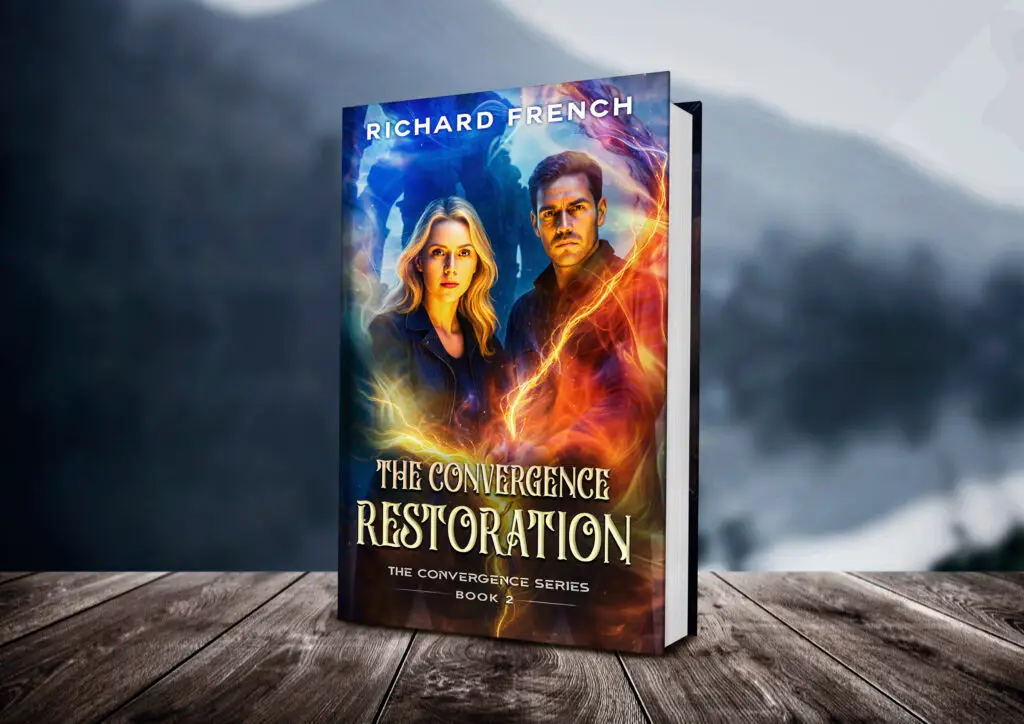
The themes explored in this article form the foundation of my latest fantasy novel, “The Convergence: Restoration.” In this story, characters discover that what they believed were opposing forces (unified and separated magic) were actually meant to work in harmony. Their journey mirrors the challenges we face when binary thinking limits our potential.
Through an engaging narrative, this fantasy fiction demonstrates how artificial conflicts dissolve when we stop choosing sides and start seeking synthesis. The characters learn that “reality works best when unified and separated forces exist in creative tension”: a principle that applies as much to organizational strategy as it does to magical restoration.
What readers are discovering: Business professionals report breakthrough insights for handling workplace conflicts, making strategic decisions under pressure, and navigating complex team dynamics after seeing how the characters resolve their false choice dilemmas. The story provides a mental framework for recognizing when you’re trapped in binary thinking and finding the synthesis solutions that create competitive advantages.
The book shows how the most powerful solutions often emerge not from choosing between alternatives, but from questioning why such choices are necessary in the first place. In today’s rapidly evolving business landscape, this skill becomes increasingly valuable for career advancement and organizational success.
Ready to discover your own breakthrough solutions through an engaging fantasy story? Get your copy today:
Order directly from my website | Get it on Amazon | Available wherever books are sold
